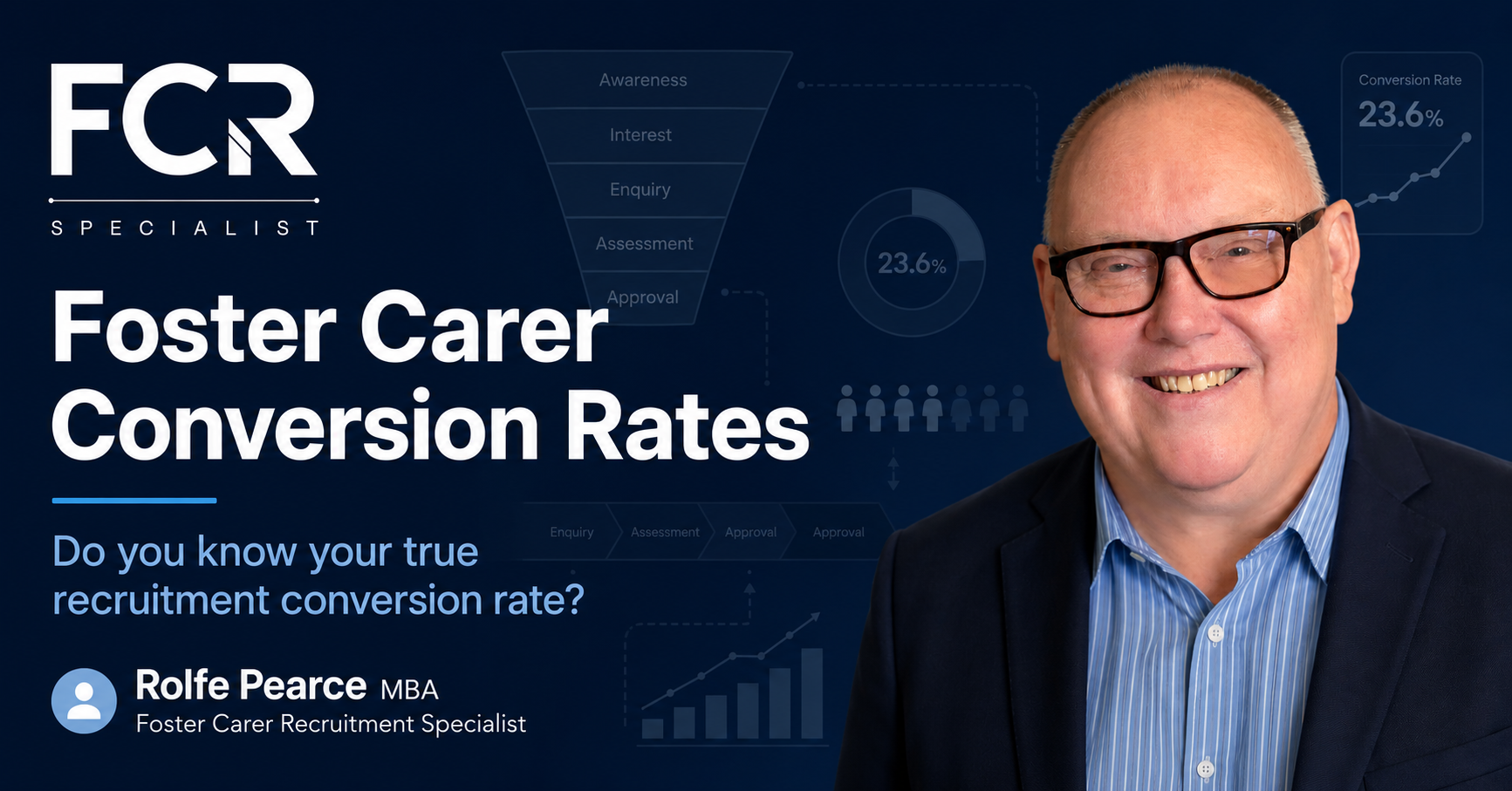
Do You Know Your True Foster Carer Recruitment Conversion Rate?
As a senior fostering leader, you will probably be told how many enquiries your service has generated.
You may also receive updates on initial visits, applications, assessments and approvals.
But do those figures tell you whether your recruitment process is actually working?
A service can generate a high number of enquiries and still approve very few new foster carer households.
That does not necessarily mean the marketing has failed.
It may mean that the people making contact are being lost somewhere between their first enquiry and the start of assessment.
The headline number of enquiries can therefore create its own form of reassurance.
The campaign generated interest.
The phone rang.
The website forms were completed.
The recruitment activity appears to have delivered.
But what happened next?
How many people were contacted promptly?
How many had a meaningful conversation?
How many attended an information event?
How many progressed to an initial home visit?
How many applied?
How many started assessment?
How many were eventually approved?
These are not simply operational details for the recruitment team.
They are leadership information.
Because every significant reduction between one stage and the next tells you something about the way your service recruits.
A large drop immediately after enquiry may indicate slow contact, poor follow-up or people being unable to speak to the service outside normal office hours.
A large drop before the initial visit may suggest that the early conversation is not building enough confidence.
A large drop between initial visit and application may indicate that expectations are unclear, the process feels too complicated or the applicant does not understand what happens next.
A large drop during assessment may point to a mismatch between the recruitment message and the reality of becoming approved.
It is also important to separate genuine withdrawals from applicants who have simply stopped responding.
“Unable to contact” is not always a reason for withdrawal.
It may be the result of the contact strategy.
How many times was the applicant called?
At what time of day?
Was a text message sent?
Was an email used?
Was an evening or weekend conversation offered?
Did anyone try to re-engage them later?
Without this information, it is easy to conclude that applicants have lost interest when the service may simply have lost contact.
The purpose of understanding conversion is not to place blame on recruitment or assessment teams.
It is to understand where interested people are being lost and whether the service can do something differently.
Senior leaders should be able to see the conversion rate between every major stage of the applicant journey.
Not simply:
Enquiries received: 300
But:
Enquiries contacted
Meaningful conversations completed
Initial visits arranged
Initial visits completed
Applications received
Assessments started
Approvals achieved
And alongside those figures:
How long did each stage take?
Why did people withdraw?
What action was taken to retain or re-engage them?
The most useful recruitment question is not always:
“How do we generate more enquiries?”
Sometimes it is:
“What are we doing with the enquiries we already have?”
Before increasing the advertising budget, make sure you understand how effectively your current interest is being converted into new foster carer households.
More enquiries entering a weak process will not necessarily create more foster carers.
It may simply create more people to lose.
#Foster #Fostering #Fostercare #Fostercarer #RCC #IFA #LAering leader, you will probably be told how many enquiries your service has generated.
You may also receive updates on initial visits, applications, assessments and approvals.
But do those figures tell you whether your recruitment process is actually working?
A service can generate a high number of enquiries and still approve very few new foster carer households.
That does not necessarily mean the marketing has failed.
It may mean that the people making contact are being lost somewhere between their first enquiry and the start of assessment.
The headline number of enquiries can therefore create its own form of reassurance.
The campaign generated interest.
The phone rang.
The website forms were completed.
The recruitment activity appears to have delivered.
But what happened next?
How many people were contacted promptly?
How many had a meaningful conversation?
How many attended an information event?
How many progressed to an initial home visit?
How many applied?
How many started assessment?
How many were eventually approved?
These are not simply operational details for the recruitment team.
They are leadership information.
Because every significant reduction between one stage and the next tells you something about the way your service recruits.
A large drop immediately after enquiry may indicate slow contact, poor follow-up or people being unable to speak to the service outside normal office hours.
A large drop before the initial visit may suggest that the early conversation is not building enough confidence.
A large drop between initial visit and application may indicate that expectations are unclear, the process feels too complicated or the applicant does not understand what happens next.
A large drop during assessment may point to a mismatch between the recruitment message and the reality of becoming approved.
It is also important to separate genuine withdrawals from applicants who have simply stopped responding.
“Unable to contact” is not always a reason for withdrawal.
It may be the result of the contact strategy.
How many times was the applicant called?
At what time of day?
Was a text message sent?
Was an email used?
Was an evening or weekend conversation offered?
Did anyone try to re-engage them later?
Without this information, it is easy to conclude that applicants have lost interest when the service may simply have lost contact.
The purpose of understanding conversion is not to place blame on recruitment or assessment teams.
It is to understand where interested people are being lost and whether the service can do something differently.
Senior leaders should be able to see the conversion rate between every major stage of the applicant journey.
Not simply:
Enquiries received: 300
But:
Enquiries contacted
Meaningful conversations completed
Initial visits arranged
Initial visits completed
Applications received
Assessments started
Approvals achieved
And alongside those figures:
How long did each stage take?
Why did people withdraw?
What action was taken to retain or re-engage them?
The most useful recruitment question is not always:
“How do we generate more enquiries?”
Sometimes it is:
“What are we doing with the enquiries we already have?”
Before increasing the advertising budget, make sure you understand how effectively your current interest is being converted into new foster carer households.
More enquiries entering a weak process will not necessarily create more foster carers.
It may simply create more people to lose.
#Foster #Fostering #Fostercare #Fostercarer #RCC #IFA #LA